
No products in the cart.
News, Vaporstorm, 未分类
Refrigerant Gas R454b/yf1234 & XL20(R454C) in Commercial Heat Pumps?
What do you know about Refrigerant Gas R454b/XL41/DR5A/yf1234 & XL20(R454C) in Commercial Heat Pump Systems?

Refrigerants Families including Refrigerant Gas R454b/XL41/DR5A/yf1234 & XL20(R454C) in Commercial Heat Pump Systems:

Refrigerant Gas R454b/XL41/DR5A/yf1234 & XL20(R454C), Low GWP, the Replacements of R-410A in Commercial Heat Pump Systems

| XL55 (R-452B) | XL41 (R-454B) |
| ※ Most optimized R-410A replacement | ※ Lowest GWP 410A replacement |
| ※ Best fit for R410A new equipment design | ※ Close match to 410A |
| ※ Best energy performance | ※ Good energy performance |
| ※Lowest 2L flammability | ※ 2L flammable |
| ※ GWP = 698(AR4), 676(AR5) | ※ GWP = 466(AR4), 467(AR5) |
Various Refrigerants (Gas R454b/XL41/DR5A/yf1234, XL20(R454C & R410) Comparison of Physical Properties for Commercial Heat Pump Systems
| Parameter | R-410A | XL41 (R-454B) | R-32 |
| Refrigerant Type | HFC Blend | HFO Blend | HFC |
| Components | R32/R125 | R32/R1234yf | Singal Refrigerant |
| (50%/50%) | (68.9%/31.1%) | ||
| GWP(1) | 1924 | 467 | 677 |
| Safety Grade | A1 | A2L | A2L |
| Critical Temperature(℃) | 71.3 | 76.5 | 78.105 |
| Boiling point temperature (℃) | -51.5 | -50.9 | -51.651 |
| Steam pressure at 25℃ (bar) | 16.52 | 15.22 | 16.896 |
| Liquid Density at 25℃(kg/m3) | 1059 | 980 | 961 |
| LFL-UFL (%v) | None | 11.25~22 | 14~31 |
| XL41 (R-454B) has lower GWP, lower operating pressure, and greater safety compared to R32 | |||
| Note: | |||
| (1) The GWP values are based on data from the IPCC 5th Assessment Report | |||
Flammability Comparison via the Test Station

Flammability Performance of refrigerant (Gas R454b/XL41/DR5A/yf1234, XL20(R454C & R410) at 0.233sec. after ignition
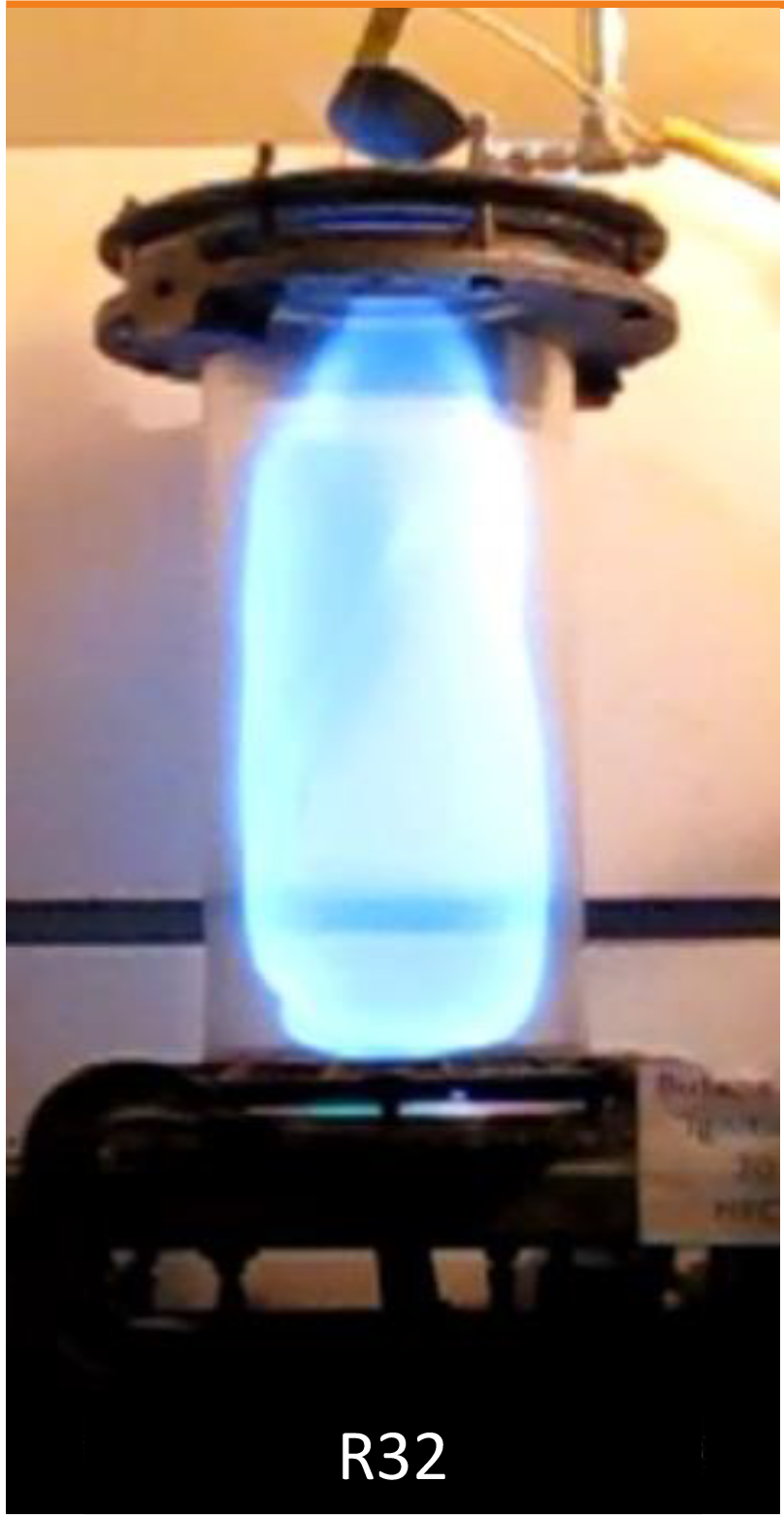
■ R32 reached the top of cylinder in 0.233 seconds
■ Note stopper release at top.
Comparison Refrigerant Gas R32 vs XL41(R454B)
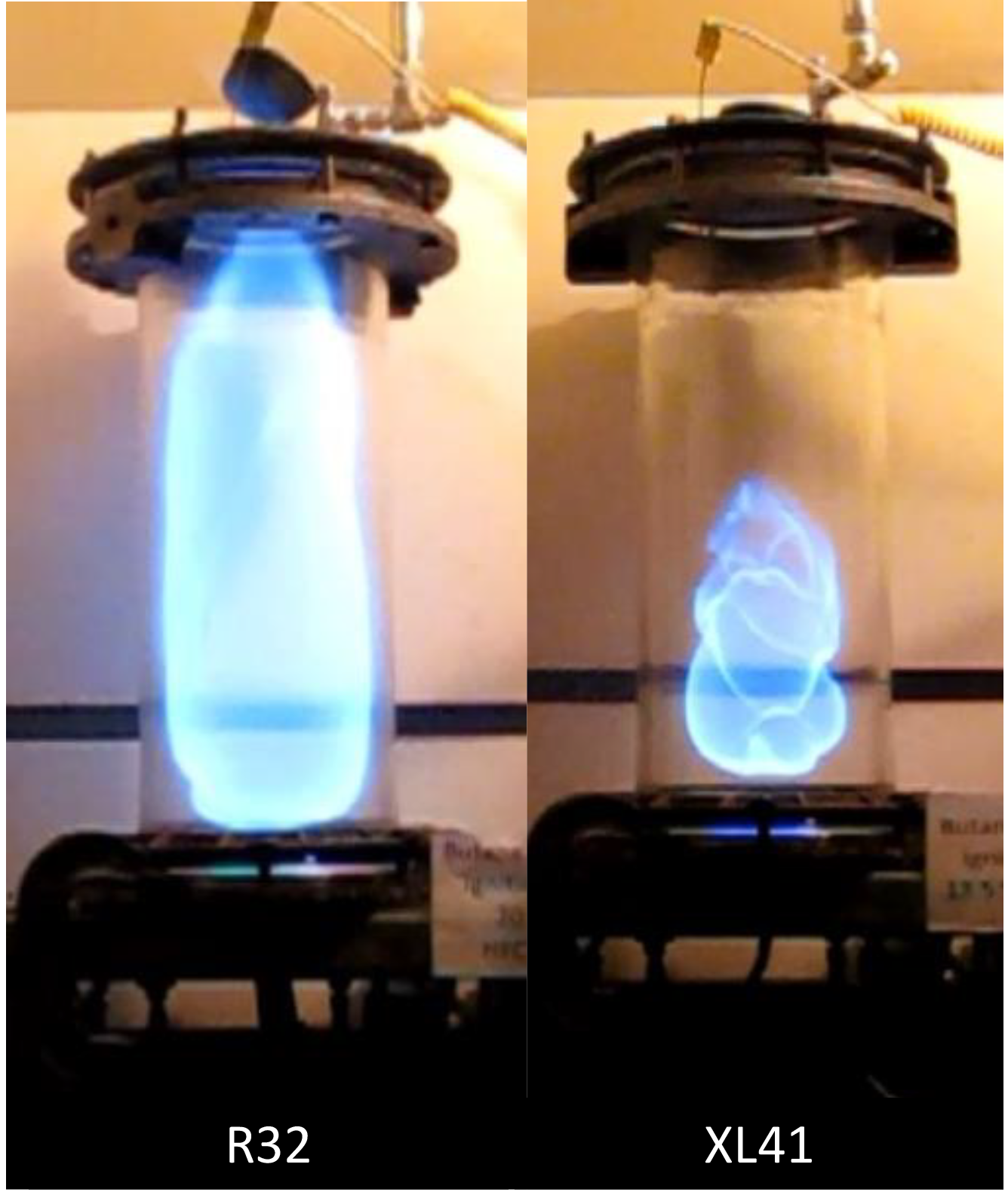
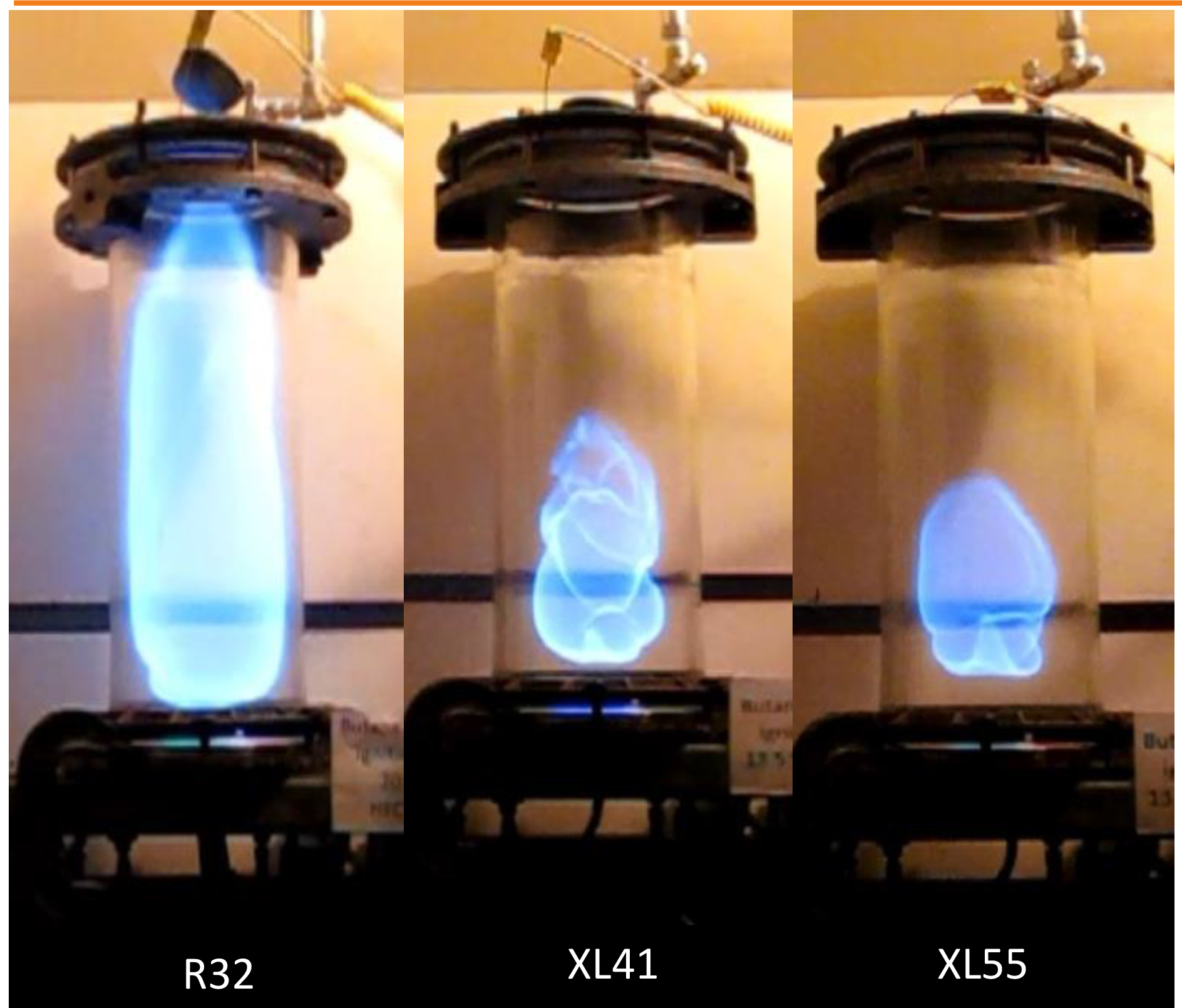
Comparison of R32, XL41 and XL55 (Refrigerant Gas for Heat Pump)
Refrigerant | BV at 23℃ | MIE at 23℃ | Statistical |
dry air (cm/s) | 50% RH (mJ) | MIE Es (mJ) | |
(+/-50%) | |||
R32 | 6.7 | 30-100 | 40 |
XL41(R-454B) | 3.7 | 100-300 | 150 |
XL55((R-452B) | 3 | 100-300 | 200 |
| XL55 has lower flammability properties compared with R32 & XL41 based on MIE (minimum ignition energy) and BV(burning velocity). | |||
| MIE: Minimum ignition energy (at 23 degrees and 50% humidity) | |||
| MJ (megajoules) | |||
Theoretical Cycle Calculation on Refrigerant Gas R454b/XL41/DR5A/yf1234, XL20/R454C & R410 for Heat Pump Water Heater/Chiller

| Item No. | Unit | R-410A | DR-5A(R-454B) |
| Capacity vs. R-410A | % | 0% | -4% |
| COP vs. R-410A | % | 0% | 1% |
| Glide | (K) | 0.1 | 1.1 |
| T Discharge | (℃) | 82 | 87 |
| Theoretical calculations are based on: | |||
| Condensation temperature=46.1℃, evaporation temperature=10℃, subcooling degree=8.3K, superheat degree=11.1K, compressor efficiency=0.7 | |||
Performance Comparison on R410, R454B(XL55), & R452B(XL41)
- Tested off-the-shelf 8.8 kW, 16 SEER ducted split Air Conditioner/Heat Pump system in environmental chamber.
- Scroll compressor with POE lubricant.
- Replaced OEM TXV with EEV to match R-410A superheat.
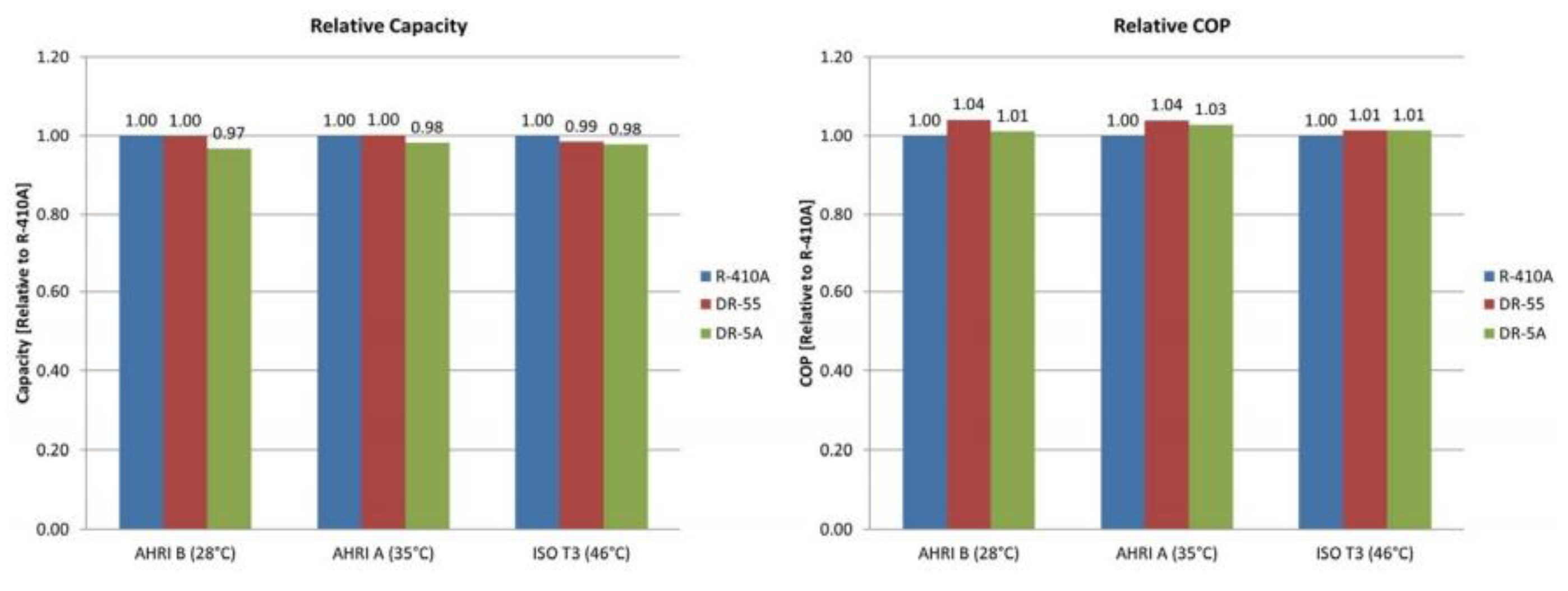
- Replaced OEM TXV with EEV to match R-410A superheat
- Close capacity match with improved COP with R-452B(DR-55) & R-454B(DR-5A)
Comparison of Relative Mass Flow Rate and Discharge Temperature on R-410A, R-452B(DR-55) and R-454B(DR-5A)
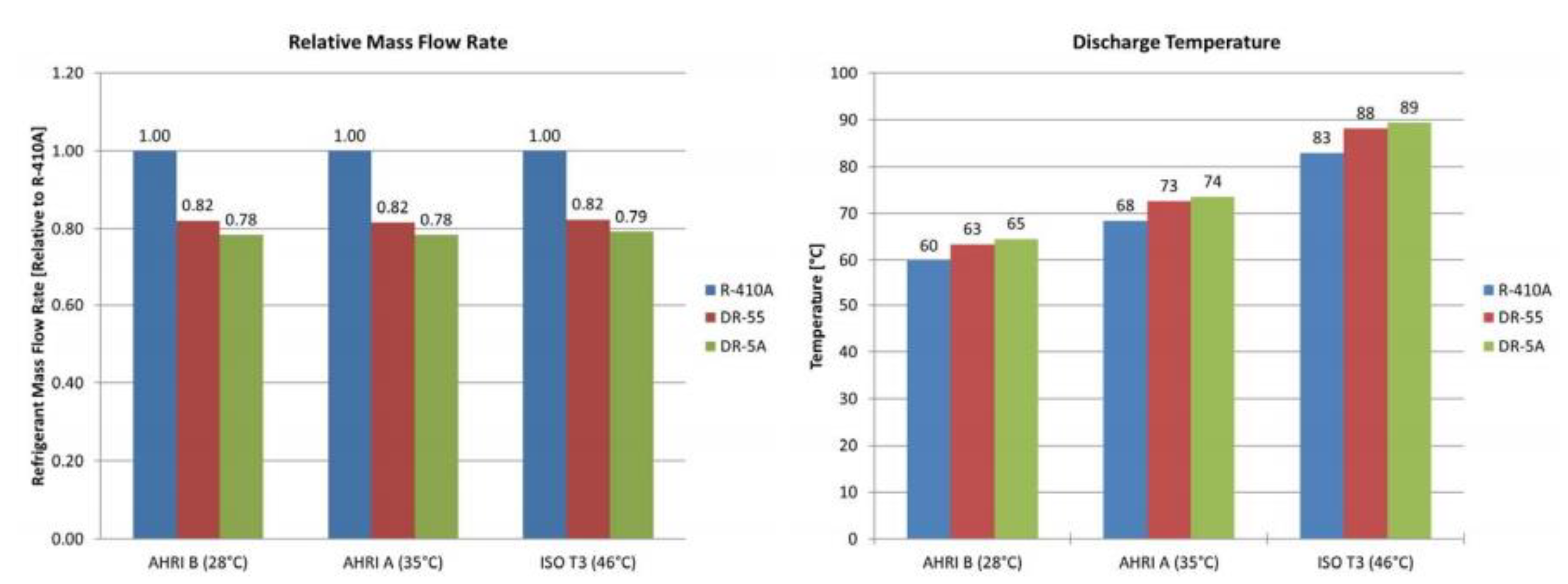
- Mass flow rate lower than R-410A.
- Discharge temperatures only slightly higher than R-410A.
- No discharge temperature management needed.
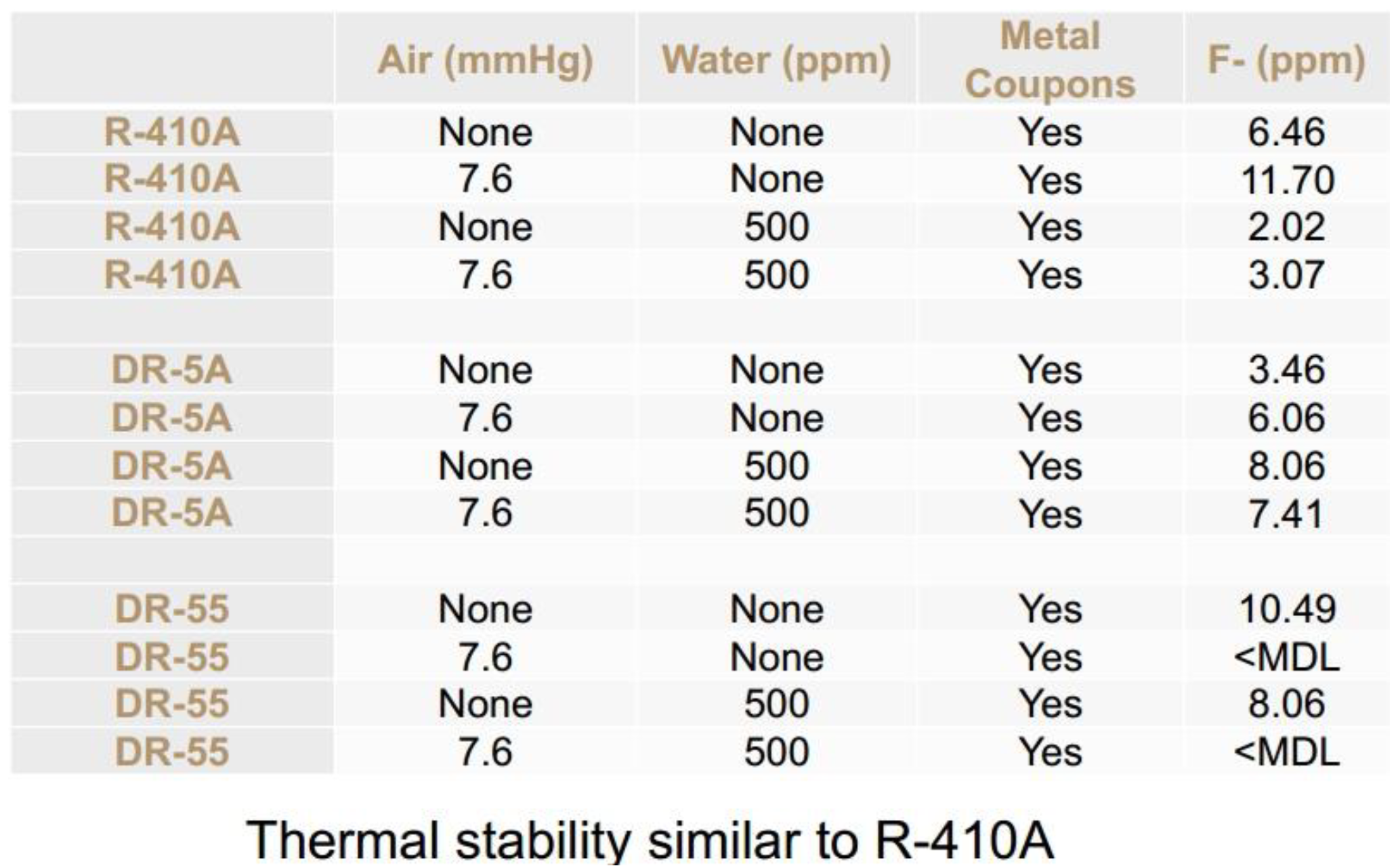
Thermal Stability of R-452B(DR-55) and R-454B(DR-5A)
- Thermal stability was evaluated using ASHRAE Standard 97 with RL32-3MAF as a lubricant.
- Tubes were loaded with carbon steel, copper, and aluminum coupons, then filled with refrigerant and lubricant.
- Some tubes contained refrigerant with air contamination (2000 ppm) and oil with moisture contamination (500 ppm).
- Tubes were sealed and aged at 175°C for 14 days.
Indicators of R-452B(DR-55) and R-454B(DR-5A):
- High concentrations of fluoride ion → fluid decomposition.
- MDL (minimum detection limit) → fluoride/chlorine ions were below procedure detection limit (MDL=0.3 ppm).
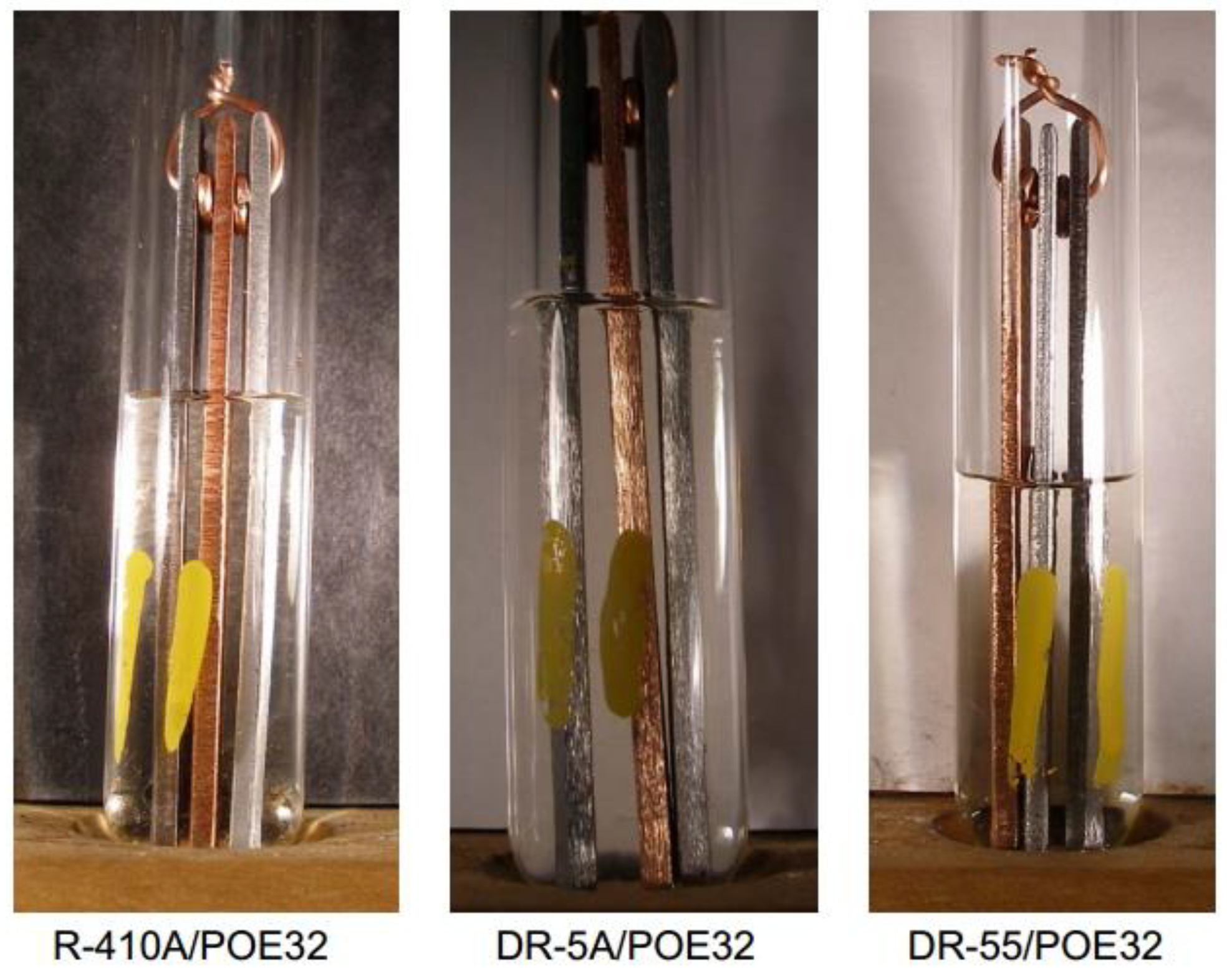
No visual changes after 175°C for 14 days or visual differences vs. R-410A.
Materials Compatibility of R-410A, R-452B(DR-55) & R-454B(DR-5A)
Test Method:
- Sealed glass tubes were prepared containing R-454B(XL41), POE lubricant and plastic/elastomeric and held at 100℃ for two weeks.
- Testing was also done with R‐410A for comparison.
- After exposure, elastomers and plastics were removed and measured for weight change, linear swell and hardness change immediately after removing from the sealed tube and also 24 hours after exposure.
Table1: R-454B(XL41) Elastomers Compatibility – 0 & 24 hours after removing from sealed tubes
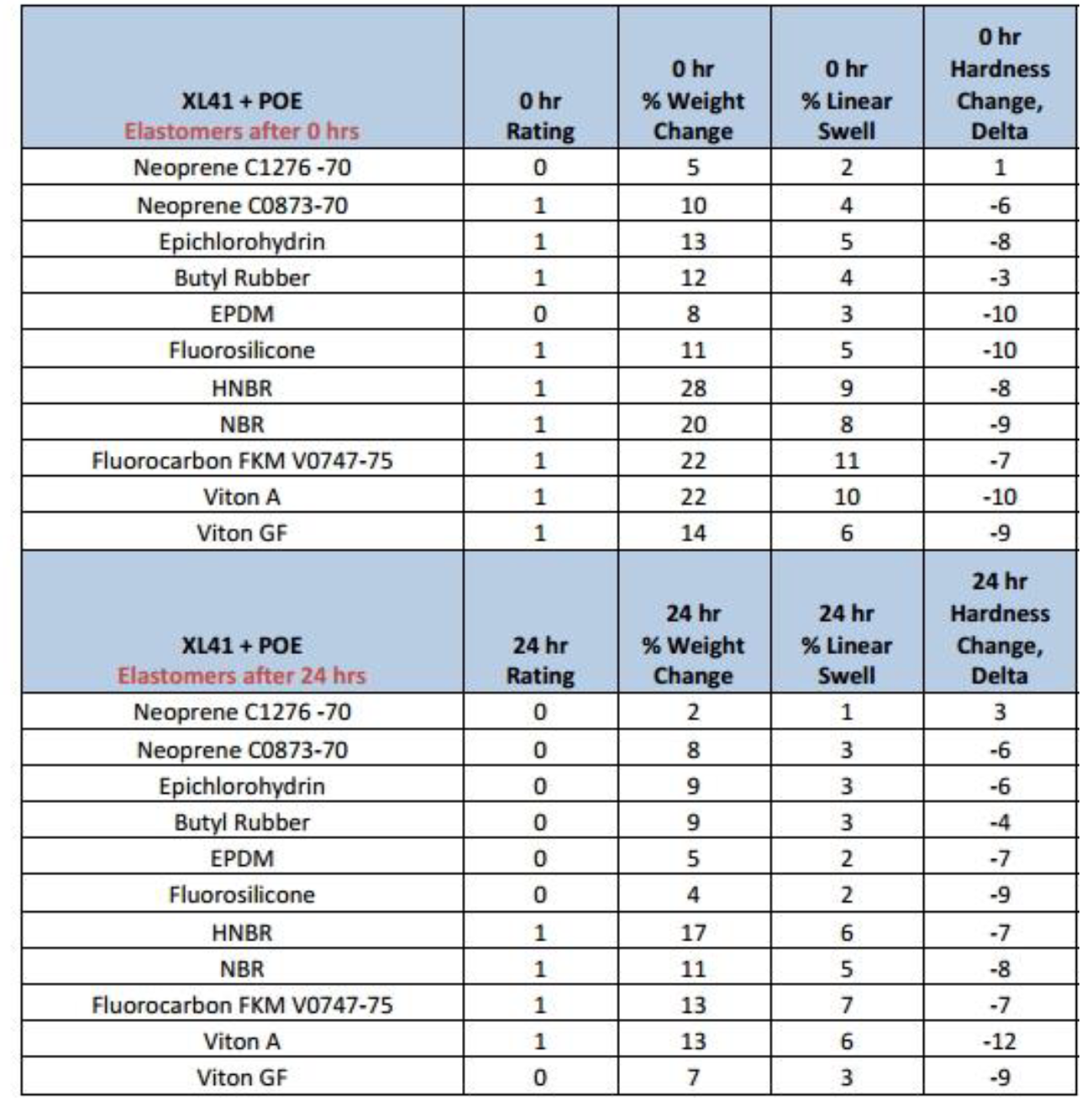
Rating:
- 0<10% weight gain, and < 10% linear swell and < 10 hardness change
- 1>10% weight gain, or > 10% linear swell or > 10 hardness change
- 2 >10% weight gain, and >10% linear swell and > 10 hardness change
Table2: R-410A Elastomers Compatibility – 0 & 24 hours after removing from sealed tubes
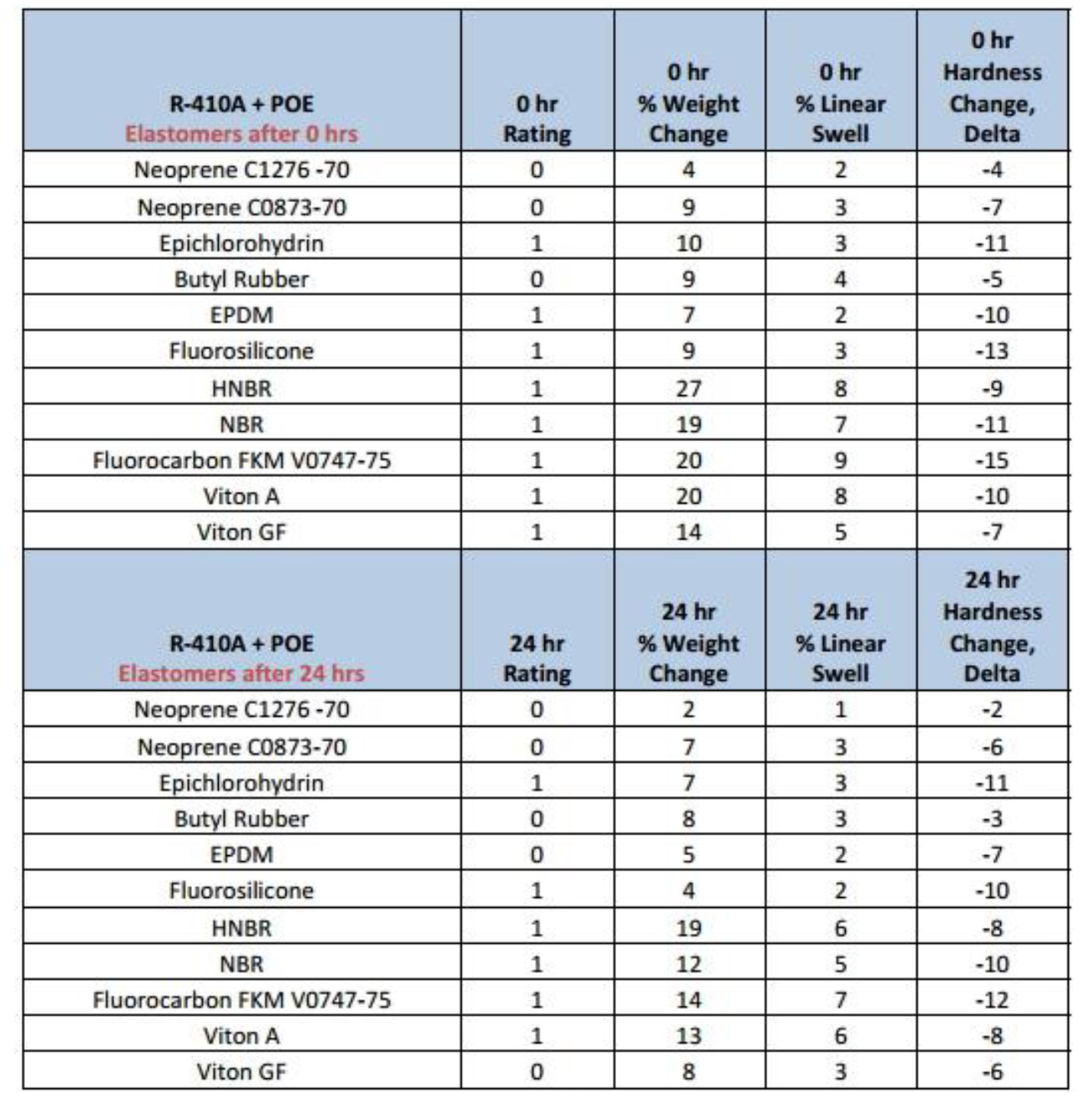
Rating:
- 0<10% weight gain, and < 10% linear swell and < 10 hardness change
- 1>10% weight gain, or > 10% linear swell or > 10 hardness change
- 2 >10% weight gain, and >10% linear swell and > 10 hardness change
Table 3: R-454B(XL41) Plastics Compatibility – 0 and 24 hours after removing from sealed tubes
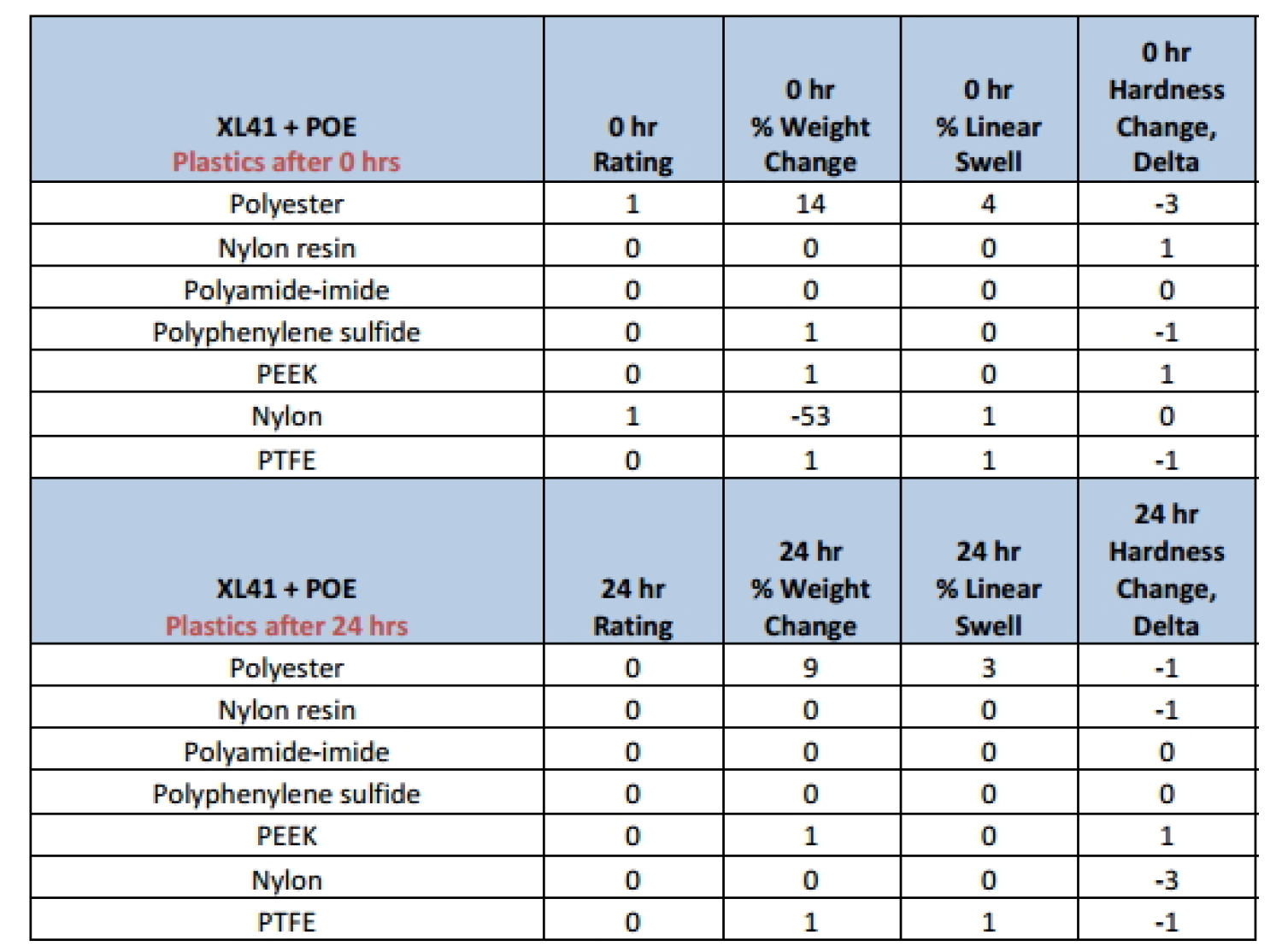
Table 4: R-410A Plastics Compatibility – 0 and 24 hours after removing from sealed tubes
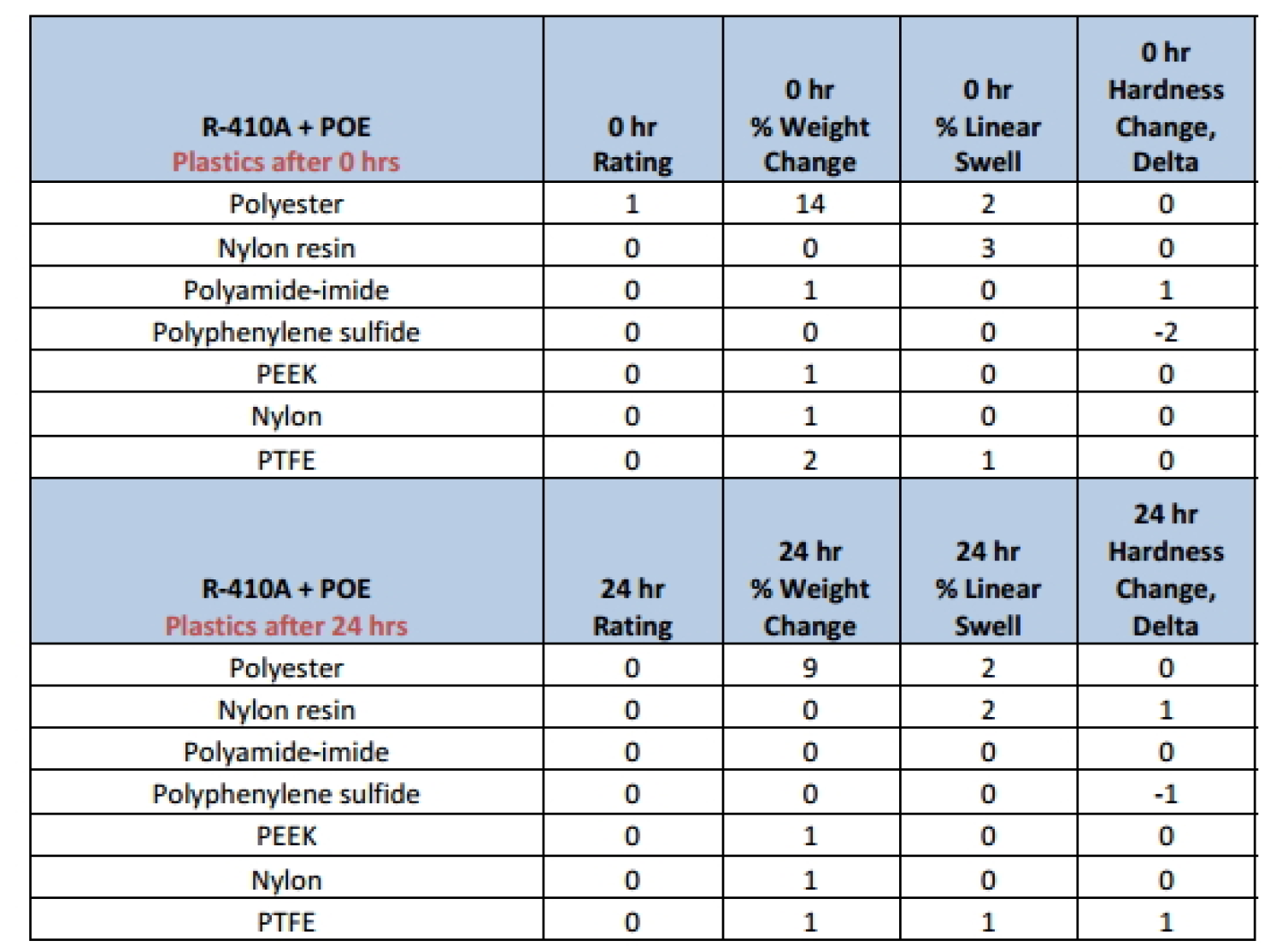
Rating:
- 0 <10% weight gain, and < 10% linear swell and < 10 hardness change;
- 1 >10% weight gain, or > 10% linear swell or > 10 hardness change;
- 2 >10% weight gain, and > 10% linear swell and > 10 hardness change.
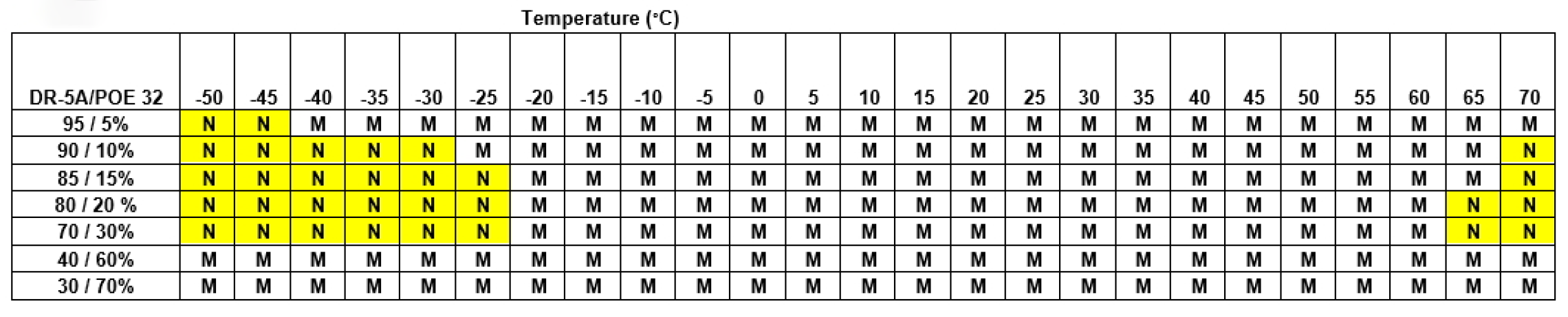
LUBRICANT MISCIBILITY of R-410A, R-452B(DR-55) & R-454B(DR-5A)
Test Method:
- A range of refrigerant and oil mixture compositions were prepared in sealed glass tubes;
- The miscibility of XL55 was tested with a POE 32 centistoke lubricant.
- The tubes were heated to 75℃ and then cooled to -50℃ and observed in 5K (9F);
- Testing was also done with R‐410A for comparison.
R-454B (XL41) Miscibility with POE 32
Refrigerant: R-410A
Lubricant: POE 32
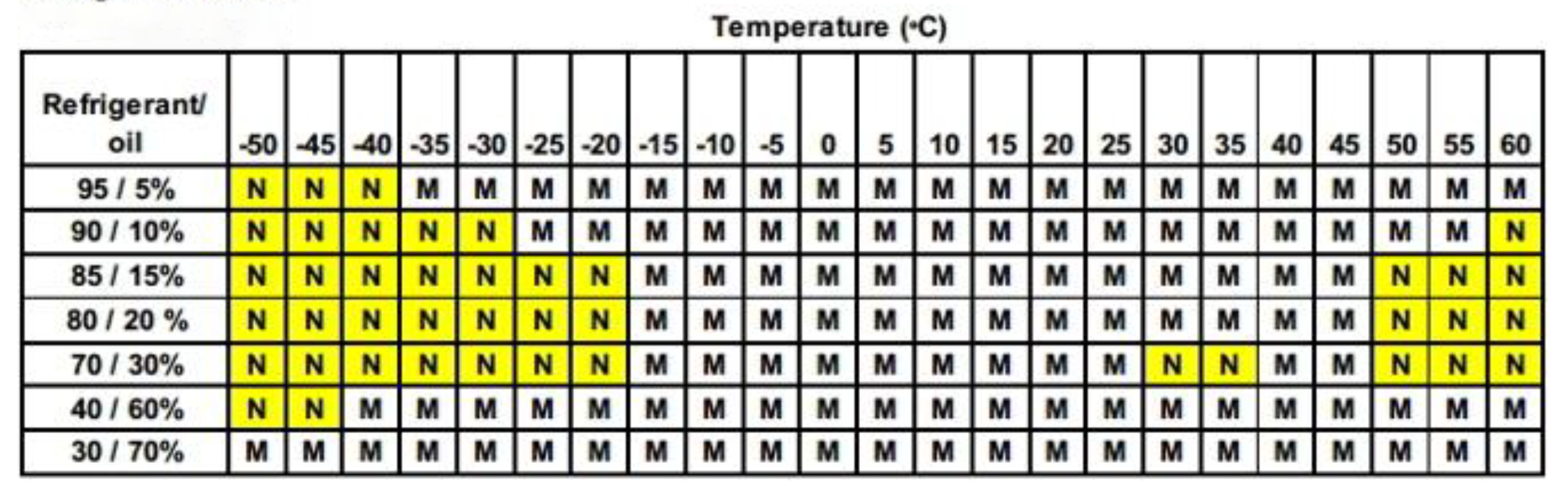
Refrigerant: DR-5A
Lubricant: POE 32
Industry Information of R-454B/DRA/XL41 & R452/DR55/ XL55
1. Mitsubishi Electric announced in May 2019 that R-454B refrigerant was used as a substitute for R-410A in the hydraulic refrigeration module heat pump system produced in Europe:
SUMAIR Heat Pump excerpt as follows: Chemours says that Mitsubishi Electric Hydronics & IT Cooling Systems SpA (MEHITS) is to offer its lower GWP refrigerants R454B and R513A on its chillers and heat pumps.
MEHITS, which was formed in 2016 from the merger of the former Climaveneta and DeLclima businesses, has selected Opteon XL41 (R454B) for its multi-scroll platform and Opteon XP10 (R513A) for its screw and centrifugal oil free chiller platform, produced in Europe.
This is seen as part of an environmental initiative to provide efficient, sustainable, and long-term solutions to the chiller market ahead of the next2021 European F-gas cap phase down and will be implemented starting this year.
R454B is a “mildly flammable”A2L refrigerant blend of 68.9% R32 and 31.1% 1234yf. It has a GWP of 466. Chemours claims it offers improved energy efficiency, similar capacity, and excellent design compatibility.
R513A is a non-toxic, non-flammable A1 refrigerant with a GWP of 631. It is a blend of 44% R134a and 56% R1234yf.
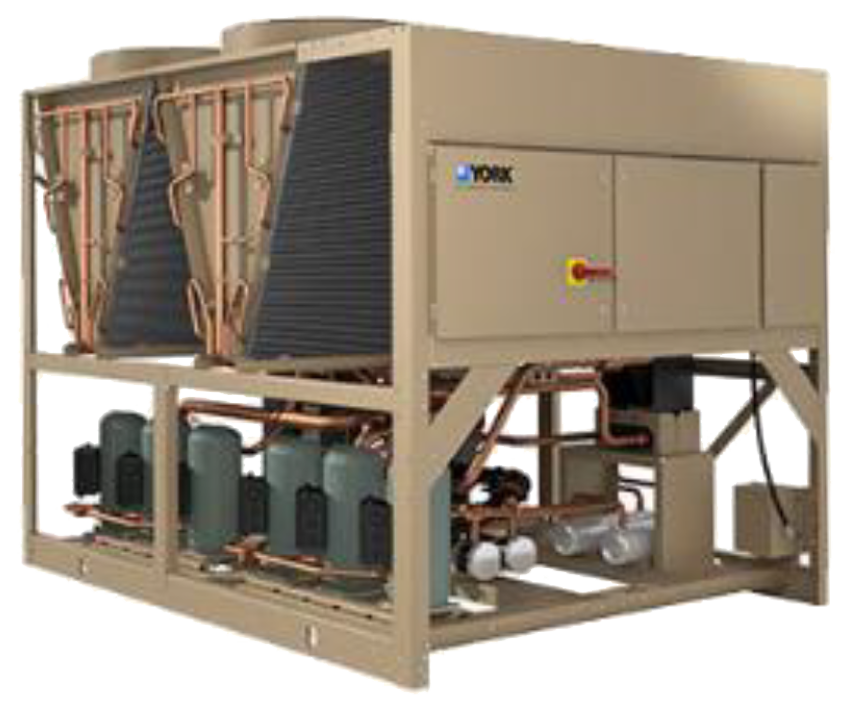
2. Carrier announced in December 2018 that R-454B refrigerant was used as a replacement for R-410A in its pipeline residential and light commercial air conditioners sold in North America.
USA: Carrier has adopted the Chemours refrigerant R454B as its primary lower GWP replacement for R410A in ducted residential and light commercial air conditioners sold in North America.
Sold by Chemours as Opteon XL41, but to be commercially renamed by Carrier as Puron Advance, the new refrigerant will be offered in Carrier products from 2023.
R454B is a “mildly flammable” A2L refrigerant blend of 68.9% R32 and 31.1% 1234yf. It has a GWP of 466.
Carrier says it sees R454B as “the best solution to minimise environmental impact and energy use, while improving performance, safety, and longevity, based on the United Nations Montreal Protocol Kigali Agreement phase down plan for HFCs.”
The air conditioning manufacturer says it has worked closely with regulators and research groups to develop standards, codes and regulations that will help ensure the safe use of R454B.
“Carrier is committed to the environment by providing efficient,responsible solutions to its customers. The move to Puron Advance refrigerant is the next logical step in the evolution of our industry,” said Matthew Pine, president, residential HVAC, Carrier.
“We carefully studied all alternatives and chose the most viable refrigerant with the lowest environmental impact for this product category. Innovation and technological advancement are in our DNA and we will continue to lead the way with the evolution of refrigerants of the future,” he added.
3. Mitsubishi Electric announced in May 2019 that R-454B refrigerant was used as a substitute for R-410A in the hydraulic refrigeration module heat pump system produced in Europe
SumAir Heat Pump notice that EUROPE: Chemours says that Mitsubishi Electric Hydronics & IT Cooling Systems SpA (MEHITS) is to offer its lower GWP refrigerants R454B and R513A on its chillers and heat pumps.
MEHITS, which was formed in 2016 from the merger of the former Climaveneta and DeLclima businesses, has selected Opteon XL41 (R454B) for its multi-scroll platform and Opteon XP10 (R513A) for its screw and centrifugal oil free chiller platform, produced in Europe.
This is seen as part of an environmental initiative to provide efficient, sustainable, and long-term solutions to the chiller market ahead of the next 2021 European F-gas cap phase down and will be implemented starting this year.
R454B is a “mildly flammable”A2L refrigerant blend of 68.9% R32 and 31.1% 1234yf. It has a GWP of 466. Chemours claims it offers improved energy efficiency, similar capacity, and excellent design compatibility.
R513A is a non-toxic, non-flammable A1 refrigerant with a GWP of 631. It is a blend of 44% R134a and 56% R1234yf.
4. In November 2019, GI Industrial Holding announced that R was adopted in the vortex chiller unit – 454B refrigerant as a substitute for R-410A.
15 NOV 2019
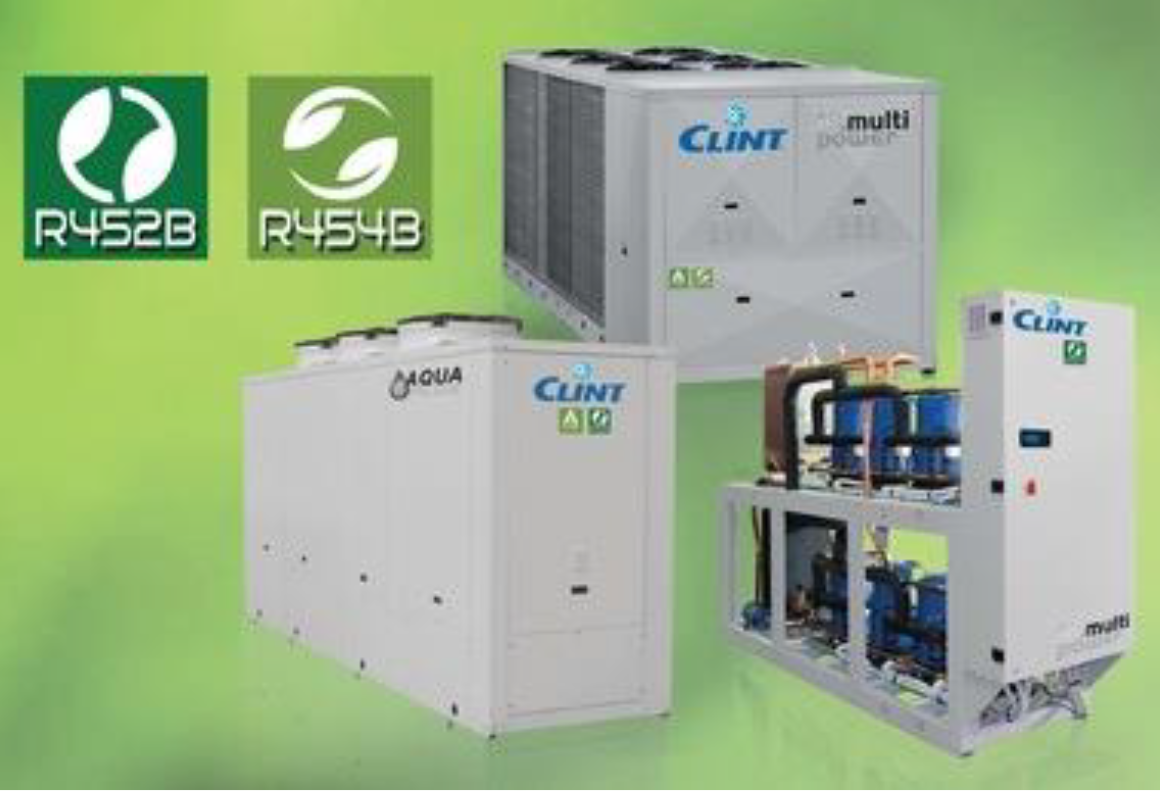
SUMAIR Heat Pump study the : Chemours has announced that ltalian manufacturer Gl Industrial Holding has adopted its lower GWP refrigerant Opteon XL41 (R454B) for use in its scroll chiller systems.
The announcement follows Gl Industrial Holding’s adoption of another Chemours R410A alternative – Opteon XL55 (R452B) – earlier this year.
Both new refrigerants have an A2L flammability rating and are designed for new equipment. They are said to offer similar capacity and improved energy efficiency compared to R410A, as well as a close match in compressor discharge temperature.
GI Holding was formed in 2000 and is now responsible for a wide range of equipment including chillers, air handling units, fan coils, rooftop units and close control equipment. Brands include CLINT, KTK Klimatechnik, Montair and Novair.
Gl Industrial Holding’s product marketing manager Enrico Pin claimed that the Gl Industrial Holding product portfolio was the first in the HVAC sector to offer a complete range of high efficiency AC and chiller units with the more sustainable refrigerant R452B instead of traditional R410A used in scroll compressors.
“Recently, we have also qualified R4548 and released compatible equipment that brings a longer-term solution to the chiller market,” he said.
Summary of R454B/XL41(yf1234) & R32 Comparing with R410A
| Vs R410A | XL41 (yf1234) | R32 |
| Equipment redesign | Nearly indistinguishable conversion, extremely easy to convert; Strong product continuity; | Yes – capacity, discharge temp. |
| GWP | 467 | 677 |
| Discharge Temperature | 4% | 16% |
| Outstanding Performance in high ambient temperature. | Worst in high ambient temperature | |
| Energy efficiency | Higher | Higher |
| When directly replaced, the energy efficiency increases by 3% | Same or better vs XL41; requires redesign. | |
| Flammability | Lower flammability | Highly flammable compared to XL41 |
| Unit Price | At present, it is relatively high, but with the significant expansion of production capacity of 1234yf next year, there will be continuous room for price adjustment | Low price |
| Temperature Glide | Small – same as 410A | Zero |
Conclusion on R454B/DR5A/XL41/yf1234
Optimal Balance of Performance, Safety & Design Compatibility
◎ Zero ODP;
◎ 31% lower GWP vs. R32 GWP;
◎ Design Compatible with current R410A Equipment;
◎ Improved energy efficiency vs R410A;
◎ Minimal re-design & capital expenditures;
◎ Lowest flammability of R-410A replacements, including R32.
* GWP based on IPCC 5th Assessment Report

Off Topic Remarks:
As per SumAir Heat Pump made further conversation with the engineer working in a famous Germany heat pump company on R454b/XL41/DR5A/yf1234, he replied that his company cancel adopting this gas and turn to R32 systems for:
What hazardous substances are produced when R1234yf is burned?
When R1234yf is burned, the primary hazardous substances produced are hydrogen fluoride (HF) and tetrafluoroethene.
* Hydrogen fluoride (HF): This is a highly corrosive and toxic gas that can cause severe burns upon skin contact.
* Tetrafluoroethene: A colorless gas that is a potent greenhouse gas.
Important considerations:
* Respiratory protection: When handling R1234yf and its combustion products, appropriate respiratory protection is essential.
* Protective clothing: Protective clothing that shields the skin and eyes is also crucial.
* Ventilation: Adequate ventilation should be ensured in areas where R1234yf may be released.
Professional assistance:
In case of accidents or incidents involving R1234yf, the appropriate professionals (e.g., fire department, poison control center) should be contacted immediately.
Further information:
For detailed information on the hazards of R1234yf and its combustion products, I recommend consulting the Safety Data Sheet (SDS) for this substance.
Disclaimer:
This information is intended for general knowledge and does not replace professional advice.
Now what do you say about these two Refrigerant Gas in Commercial Heat Pump Systems?
